healyourinnerpeace
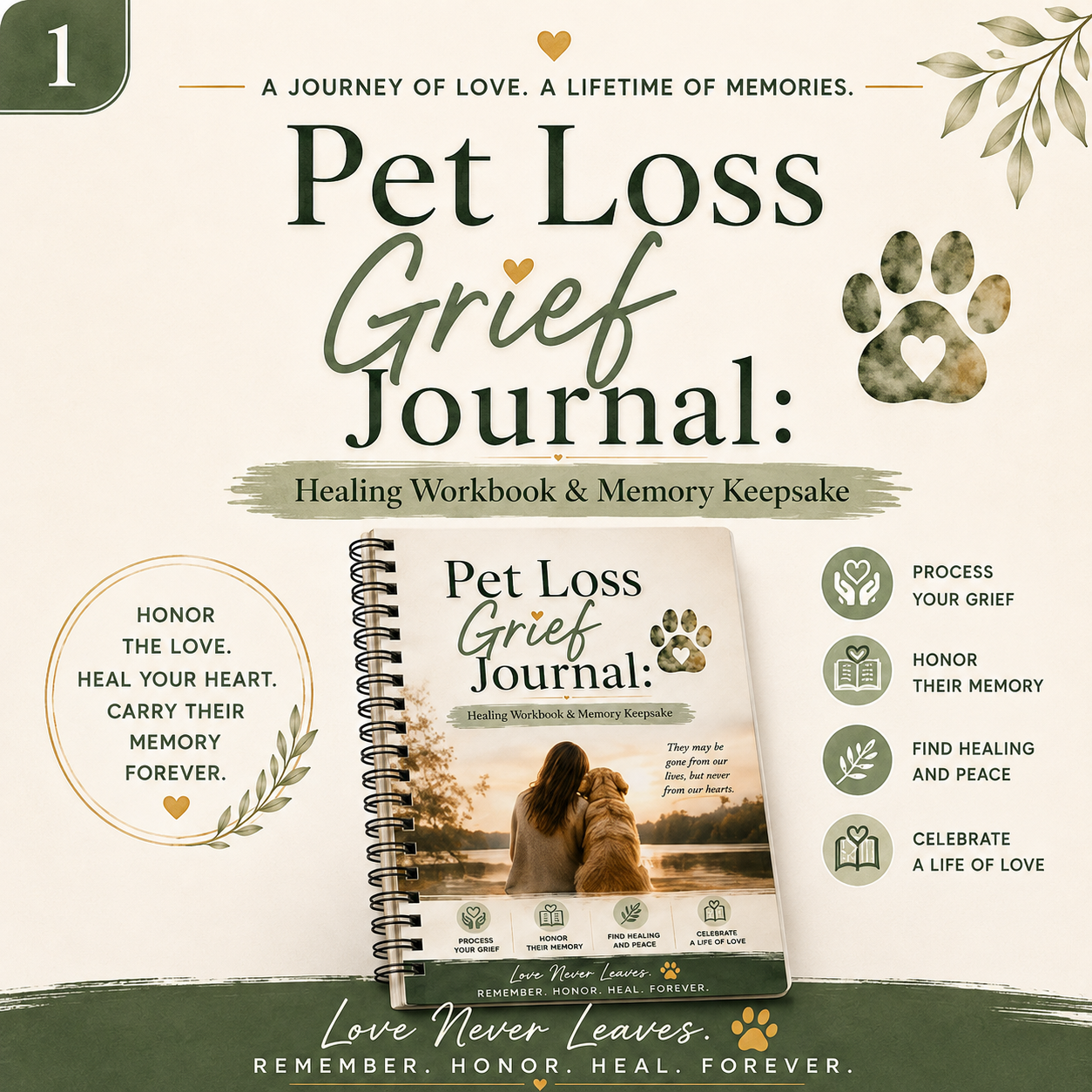
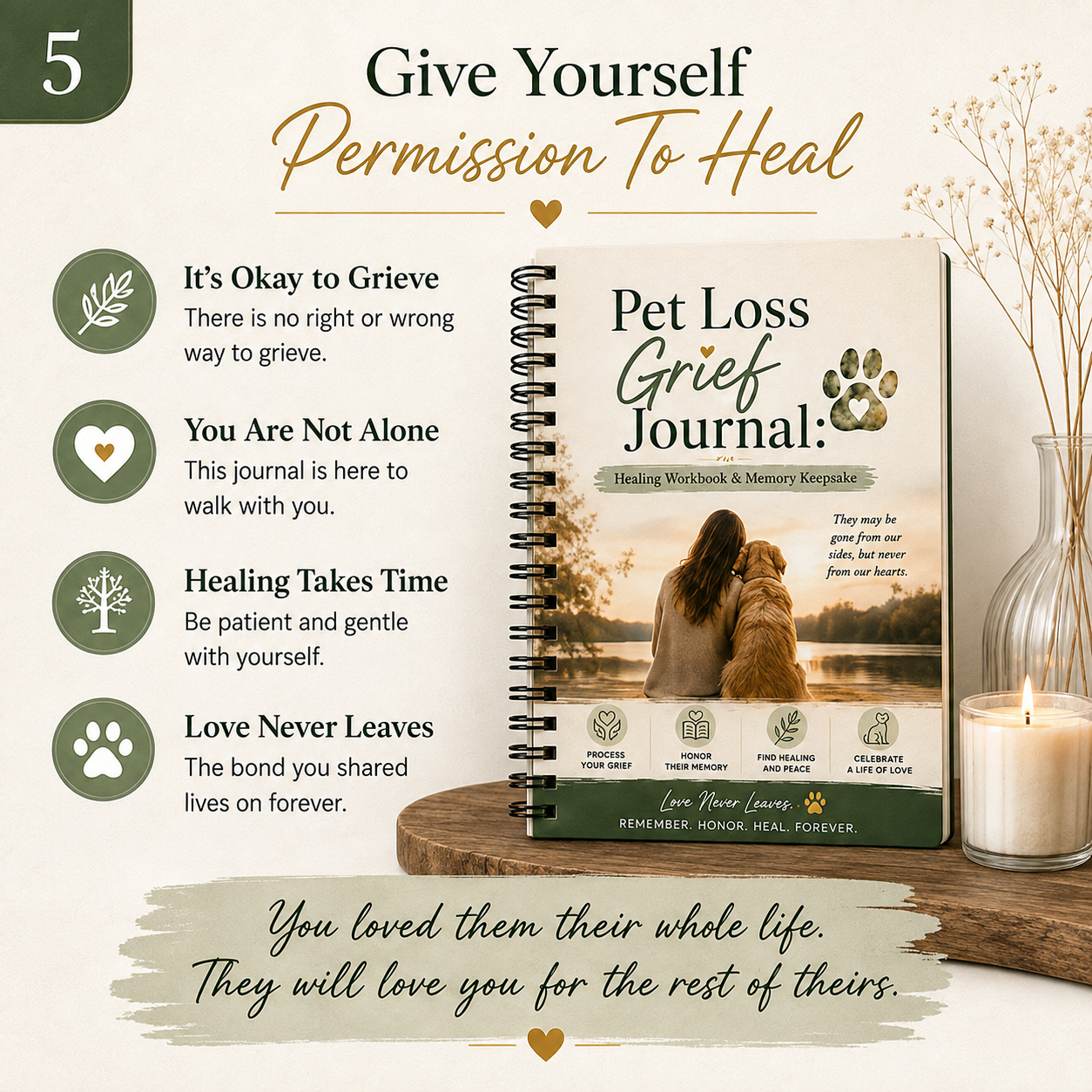
Pet Loss Grief Journal: Healing Workbook & Memory Keepsake
Couldn't load pickup availability
๐ค A Journey of Love. A Lifetime of Memories.
Pet Loss Grief Journal
Healing Workbook & Memory Keepsake
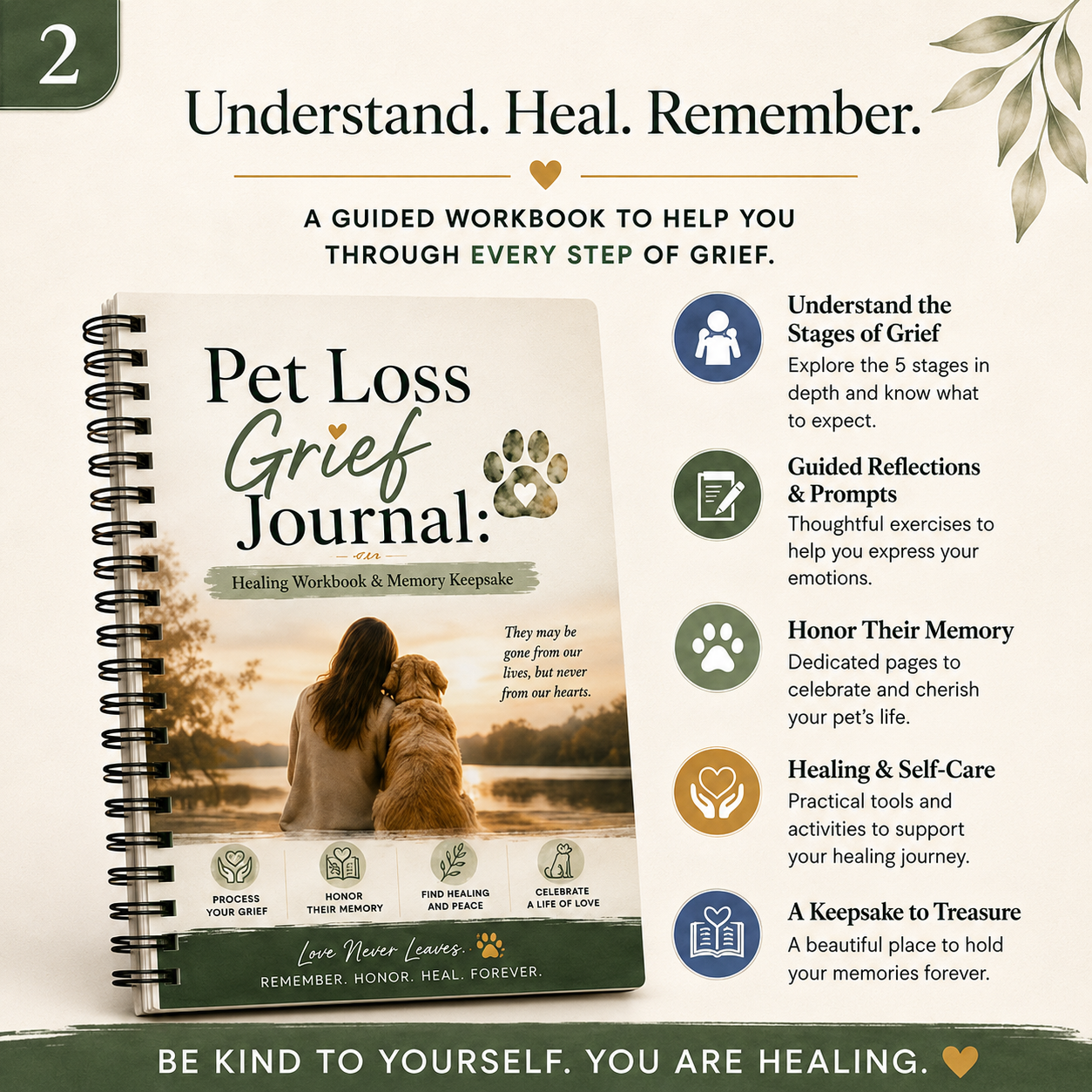
They may be gone from your life, but never from your heart. This guided workbook walks with you through every stage of pet loss โ helping you process your grief, honor their memory, and slowly find peace.
|
๐
Process |
๐
Honor |
๐ฟ
Find Healing |
๐พ
Celebrate |
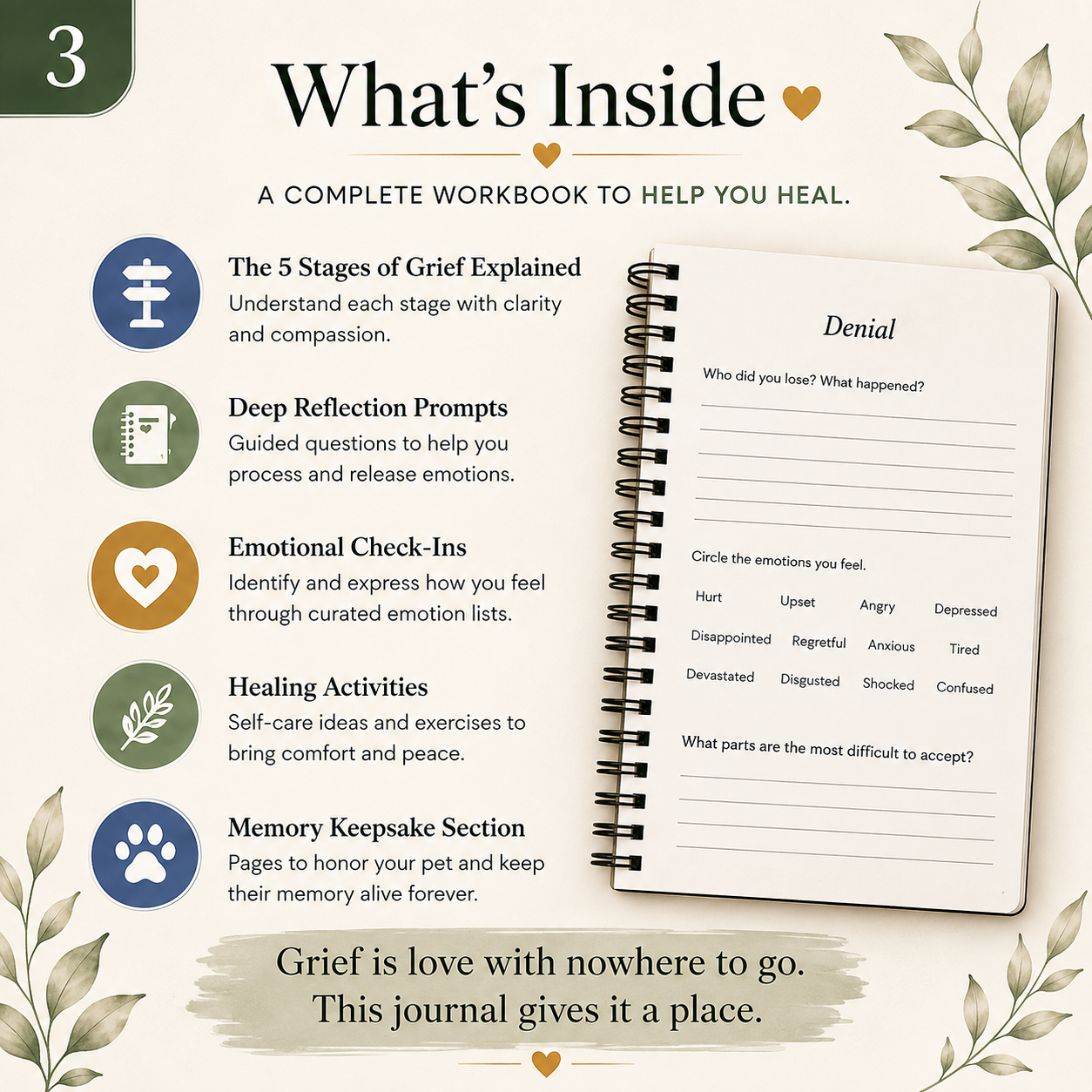
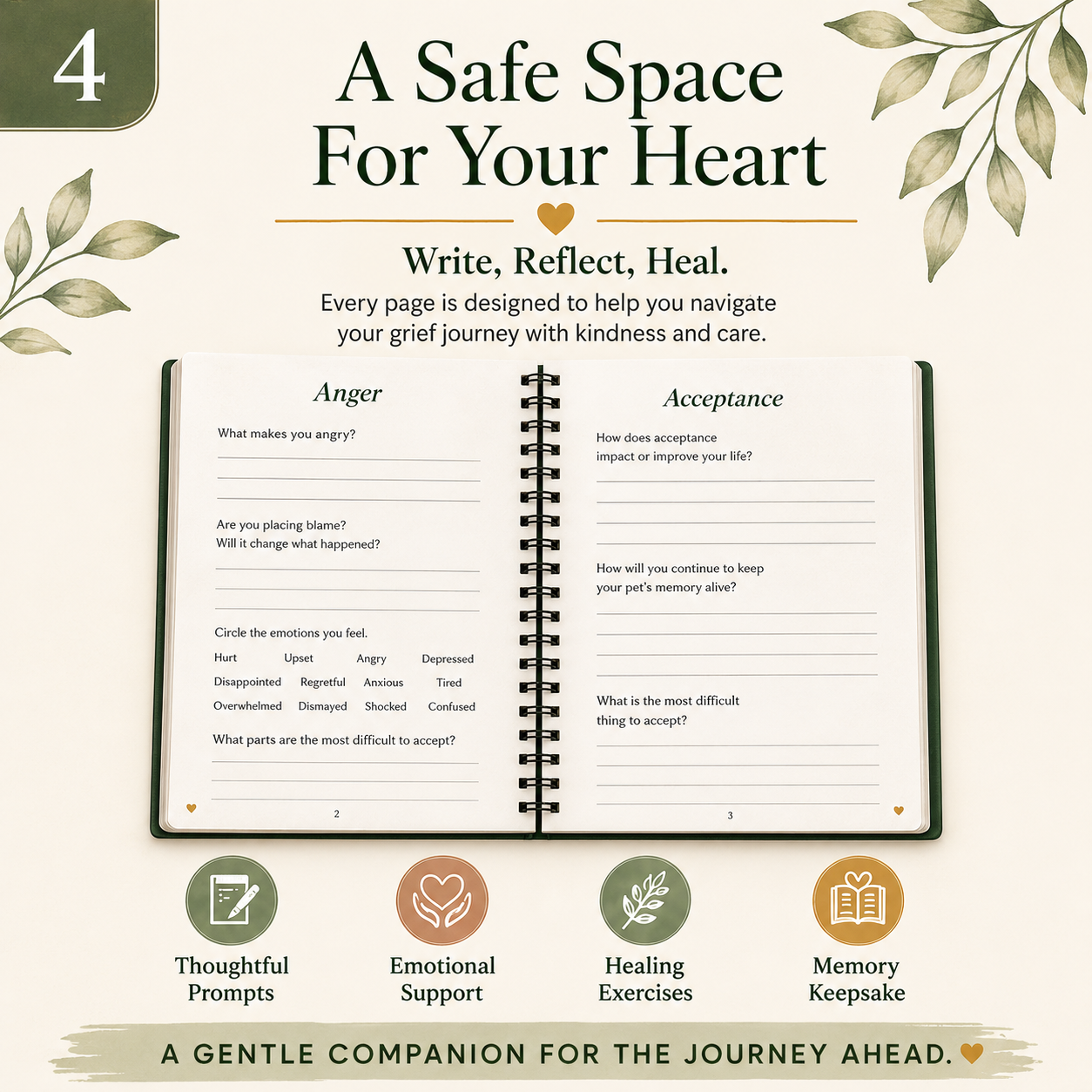
What's Inside ๐ค
The 5 Stages of Grief, Explained
Understand denial, anger, bargaining, depression & acceptance with clarity and compassion.
Deep Reflection Prompts
Guided questions to help you process and release what you're carrying.
Emotional Check-Ins
Curated emotion lists to help you identify and express exactly how you feel.
Healing Activities
Self-care ideas and exercises to bring comfort as you move through grief.
Memory Keepsake Section
Dedicated pages to celebrate and preserve your pet's life โ forever.
"Grief is love with nowhere to go.
This journal gives it a place."
Perfect For ๐๏ธ
|
Pet Parents Who Are Grieving A compassionate space to process your loss. |
Those Who Want to Heal Guided tools to help you move forward. |
Anyone Who Wants to Remember Celebrate their life and keep their memory alive. |
๐ฉ Instant PDF Download โ print at home or journal digitally.
๐ค Delivered straight to your inbox after purchase.
Be kind to yourself. You are healing.
Remember ยท Honor ยท Heal ยท Forever


- 5 stars: 34 (100%)
- 4 stars: 0 (0%)
- 3 stars: 0 (0%)
- 2 stars: 0 (0%)
- 1 star: 0 (0%)
I wasn't going to do the Write a Letter exercise. It felt too painful. But I'd worked through the denial and anger worksheets and by that point the workbook had built enough trust that I decided to try it. I sat down and wrote a letter to Charlie โ my dog of 9 years who I lost last month โ and I said everything I hadn't been able to say. That I was sorry. That he was the best thing in my life. That I hope he knew how loved he was. I cried harder than I have since the day it happened. But afterward something felt different. Less heavy. The signs and symptoms chart was also really helpful. The Rainbow Bridge poem at the end was the perfect closing. This workbook walked me through my grief step by step and I am genuinely grateful it exists.
I bought this for my best friend after she lost Ace โ her dog of 14 years. She had been stuck in what I now know (thanks to this workbook) was the Denial stage for weeks. I didn't know how to help. When he worked through this, she called me and said the 15 journal prompts finally helped him understand what he was feeling. The emotion-circle chart let him name feelings she couldn't articulate before. The journal prompt 'Is there a song or smell that makes you remember them?' apparently opened a floodgate in a way that felt safe. He said the Rainbow Bridge poem made him feel like Ace was at peace. Best thing I've ever gifted someone who was hurting.
I was afraid that 'acceptance' meant I was supposed to be okay with losing Smokey. That I was supposed to stop being sad. This workbook's Acceptance section says something I really needed to hear โ that acceptance doesn't mean you've moved on. It means you're learning to carry it differently. Smokey was my cat for 13 years. I lost him recently. I'm not over it. I may never be. But working through all five stages โ Denial through Acceptance โ with this workbook's worksheets and journal prompts helped me get from 'I can't function' to 'I can function and still miss him.' The rainbow bridge poem was the turning point for me. The Rainbow Bridge poem is now printed and framed by his photo. Beautiful, healing, essential workbook.
I bought this for my sister after he lost Stella โ his dog of 7 years. She had been stuck in what I now know (thanks to this workbook) was the Denial stage for weeks. I didn't know how to help. When she worked through this, he called me and said the Depression worksheet finally helped her understand what he was feeling. The emotion-circle chart let her name feelings he couldn't articulate before. The journal prompt 'What are 3 things you can do to begin feeling better?' apparently opened a floodgate in a way that felt safe. He said the Rainbow Bridge poem made him feel like Stella was at peace. Best thing I've ever gifted someone who was hurting.
I lost Bear two weeks ago. He was my dog for 5 years and the grief hit me in ways I didn't expect โ one minute I was numb, the next I was furious at the vet, the next I was negotiating with the universe about what I could have done differently. I didn't understand why I was all over the place until I found this workbook. The 5 Stages of Grief laid out exactly what was happening to me. The support through grief mind map was where I spent the most time. The worksheet for each stage has this emotion-circle with 16 different feelings and I circled almost all of them. The prompt 'Are you placing blame? Will it change what happened?' made me sit and think for a long time. The Rainbow Bridge poem at the end was the moment I finally let myself cry without trying to stop it. This workbook gave my grief a shape I could understand.
My grief counselor actually asked me where I found this workbook. That says a lot. I've been seeing her since losing Chloe โ my dog of 13 years โ recently, and she said the 5 Stages framework as presented here, with the individual worksheets and emotion-circles for each stage, is genuinely well done. The 15 journal prompts is the section she was most impressed by. I personally found the journal prompts to be the most cathartic part โ especially 'How will you honor their memory?.' The Write a Letter exercise was something I avoided for days and then did at midnight crying in my kitchen. Worth it. The healing guide with its 8 points gave me structure when everything felt chaotic. Printing this out was one of the best decisions I've made in my grief process.
I lost Chloe a month ago. She was my dog for 13 years and the grief hit me in ways I didn't expect โ one minute I was numb, the next I was furious at the vet, the next I was negotiating with the universe about what I could have done differently. I didn't understand why I was all over the place until I found this workbook. The 5 Stages of Grief laid out exactly what was happening to me. The acceptance worksheet was where I spent the most time. The worksheet for each stage has this emotion-circle with 16 different feelings and I circled almost all of them. The prompt 'Is there something you wish you could tell them?' made me sit and think for a long time. The Rainbow Bridge poem at the end was the moment I finally let myself cry without trying to stop it. This workbook gave my grief a shape I could understand.
I wasn't going to do the Write a Letter exercise. It felt too painful. But I'd worked through the denial and anger worksheets and by that point the workbook had built enough trust that I decided to try it. I sat down and wrote a letter to Sophie โ my cat of 8 years who I lost last month โ and I said everything I hadn't been able to say. That I was sorry. That she was the best thing in my life. That I hope she knew how loved she was. I cried harder than I have since the day it happened. But afterward something felt different. Less heavy. The signs and symptoms chart was also really helpful. The Rainbow Bridge poem at the end was the perfect closing. This workbook walked me through my grief step by step and I am genuinely grateful it exists. Cannot recommend this enough to anyone grieving a pet.
The what-ifs were killing me. What if I had caught it sooner. What if I had chosen a different treatment. What if I had just had more time. I lost Angel a month ago โ she was my dog for 9 years โ and I was drowning in Bargaining without even knowing that's what it was called. This workbook named it for me. The Bargaining worksheet walked me through those thoughts gently, without dismissing them. The support through grief mind map added another layer of understanding. The journal prompt 'What did you lose along with this pet?' made me realize how much I'd been holding. The 8-point healing guide at the end gave me actual concrete steps to take. I'm still grieving. But I'm not spinning in circles anymore. I will keep this workbook forever.
I have been in what this workbook calls the Depression stage for almost two months since losing Felix. He was my cat for 12 years and losing him about two months ago gutted me. I wasn't motivated to do anything โ not work, not cooking, not seeing friends. The Depression worksheet asked me 'What are 3 things you can do to begin feeling better?' and I almost laughed because the answer felt like 'nothing.' But I forced myself to write something down. And then I did one of those things the next day. And then another. The 15 journal prompts helped me understand that this stage is not permanent โ it's a stage, not a destination. The healing guide's suggestion of Therapy is what I'm working on this week. This workbook gave me a way forward when I couldn't see one. I will keep this workbook forever.
My grief counselor actually asked me where I found this workbook. That says a lot. I've been seeing her since losing Tiger โ my cat of 16 years โ last month, and she said the 5 Stages framework as presented here, with the individual worksheets and emotion-circles for each stage, is genuinely well done. The denial worksheet is the section she was most impressed by. I personally found the journal prompts to be the most cathartic part โ especially 'Is there a song or smell that makes you remember them?.' The Write a Letter exercise was something I avoided for days and then did at midnight crying in my kitchen. Worth it. The healing guide with its 8 points gave me structure when everything felt chaotic. Printing this out was one of the best decisions I've made in my grief process. I will keep this workbook forever.
The what-ifs were killing me. What if I had caught it sooner. What if I had chosen a different treatment. What if I had just had more time. I lost Misty three weeks ago โ she was my cat for 6 years โ and I was drowning in Bargaining without even knowing that's what it was called. This workbook named it for me. The Bargaining worksheet walked me through those thoughts gently, without dismissing them. The 5 stages of grief overview added another layer of understanding. The journal prompt 'What are 3 things you can do to begin feeling better?' made me realize how much I'd been holding. The 8-point healing guide at the end gave me actual concrete steps to take. I'm still grieving. But I'm not spinning in circles anymore. I will keep this workbook forever.
I was afraid that 'acceptance' meant I was supposed to be okay with losing Moose. That I was supposed to stop being sad. This workbook's Acceptance section says something I really needed to hear โ that acceptance doesn't mean you've moved on. It means you're learning to carry it differently. Moose was my dog for 7 years. I lost him six weeks ago. I'm not over it. I may never be. But working through all five stages โ Denial through Acceptance โ with this workbook's worksheets and journal prompts helped me get from 'I can't function' to 'I can function and still miss him.' The 15 journal prompts was the turning point for me. The Rainbow Bridge poem is now printed and framed by his photo. Beautiful, healing, essential workbook.
I was so angry after losing Minnie. Angry at the vet. Angry at myself. Angry that she only got 5 years. I didn't know what to do with that anger and it was eating me from the inside. This workbook has a dedicated Anger worksheet that asks you straight up โ 'Are you placing blame? Will it change what happened?' That question stopped me cold. I sat with it for a long time. The emotion-circle for that stage had me circling guilt, rage, blame, devastation โ all at once. Naming them made them less terrifying. The healing after a loss visual guide was also important for me. The Healing After a Loss guide suggested Give Yourself Grace which I've started doing. The Rainbow Bridge poem at the end brought me the first moment of peace I'd felt in weeks.
I was so angry after losing Charlie. Angry at the vet. Angry at myself. Angry that he only got 5 years. I didn't know what to do with that anger and it was eating me from the inside. This workbook has a dedicated Anger worksheet that asks you straight up โ 'Are you placing blame? Will it change what happened?' That question stopped me cold. I sat with it for a long time. The emotion-circle for that stage had me circling guilt, rage, blame, devastation โ all at once. Naming them made them less terrifying. The 15 journal prompts was also important for me. The Healing After a Loss guide suggested Honor Memories which I've started doing. The Rainbow Bridge poem at the end brought me the first moment of peace I'd felt in weeks.
I wasn't going to do the Write a Letter exercise. It felt too painful. But I'd worked through the denial and anger worksheets and by that point the workbook had built enough trust that I decided to try it. I sat down and wrote a letter to Cooper โ my dog of 17 years who I lost six weeks ago โ and I said everything I hadn't been able to say. That I was sorry. That he was the best thing in my life. That I hope he knew how loved he was. I cried harder than I have since the day it happened. But afterward something felt different. Less heavy. The bargaining worksheet was also really helpful. The Rainbow Bridge poem at the end was the perfect closing. This workbook walked me through my grief step by step and I am genuinely grateful it exists. I will keep this workbook forever.
I have been in what this workbook calls the Depression stage for almost a month since losing Smokey. He was my cat for 13 years and losing him last month gutted me. I wasn't motivated to do anything โ not work, not cooking, not seeing friends. The Depression worksheet asked me 'What are 3 things you can do to begin feeling better?' and I almost laughed because the answer felt like 'nothing.' But I forced myself to write something down. And then I did one of those things the next day. And then another. The support through grief mind map helped me understand that this stage is not permanent โ it's a stage, not a destination. The healing guide's suggestion of Lean on Others is what I'm working on this week. This workbook gave me a way forward when I couldn't see one.
I lost Bella a month ago. She was my cat for 17 years and the grief hit me in ways I didn't expect โ one minute I was numb, the next I was furious at the vet, the next I was negotiating with the universe about what I could have done differently. I didn't understand why I was all over the place until I found this workbook. The 5 Stages of Grief laid out exactly what was happening to me. The write a letter exercise was where I spent the most time. The worksheet for each stage has this emotion-circle with 16 different feelings and I circled almost all of them. The prompt 'What did you lose along with this pet?' made me sit and think for a long time. The Rainbow Bridge poem at the end was the moment I finally let myself cry without trying to stop it. This workbook gave my grief a shape I could understand.
The what-ifs were killing me. What if I had caught it sooner. What if I had chosen a different treatment. What if I had just had more time. I lost Maggie last month โ she was my dog for 11 years โ and I was drowning in Bargaining without even knowing that's what it was called. This workbook named it for me. The Bargaining worksheet walked me through those thoughts gently, without dismissing them. The 5 stages of grief overview added another layer of understanding. The journal prompt 'What did you lose along with this pet?' made me realize how much I'd been holding. The 8-point healing guide at the end gave me actual concrete steps to take. I'm still grieving. But I'm not spinning in circles anymore. Genuinely grateful I found this.
Nobody told me grief could make you physically sick. I lost Princess โ my cat of 15 years โ about two months ago and I was getting headaches, not sleeping, barely eating. I thought something was medically wrong with me on top of the heartbreak. Then I opened this workbook and the Signs and Symptoms chart literally listed everything I was feeling. Denial โ numbness, 'I'm fine.' Anger โ irritability, guilt. Depression โ sleep changes, hopelessness. Seeing it written down and categorized made me realize I wasn't falling apart โ I was grieving normally. The emotion-circle chart with 16 emotions was the section I worked through the most. The journal prompts, especially 'Is there something you wish you could tell them?,' helped me process things I had been avoiding. The Prioritizing Sleep point in the healing guide is something I'm actively working on now.
I was afraid that 'acceptance' meant I was supposed to be okay with losing Rocky. That I was supposed to stop being sad. This workbook's Acceptance section says something I really needed to hear โ that acceptance doesn't mean you've moved on. It means you're learning to carry it differently. Rocky was my dog for 6 years. I lost him recently. I'm not over it. I may never be. But working through all five stages โ Denial through Acceptance โ with this workbook's worksheets and journal prompts helped me get from 'I can't function' to 'I can function and still miss him.' The healing after a loss visual guide was the turning point for me. The Rainbow Bridge poem is now printed and framed by his photo. Beautiful, healing, essential workbook.
I ordered this at 1am because I couldn't sleep. Murphy used to sleep right next to me and his absence was unbearable. Downloaded the PDF, printed a few pages, and started working through it right there at the kitchen table. The Denial worksheet was the first one I did and it helped me admit that I had been telling everyone 'I'm fine' when I absolutely was not. The denial worksheet was the section that hit hardest. The Signs and Symptoms chart showed me that my insomnia, loss of appetite, and constant crying are all documented parts of the grief process โ I wasn't broken, I was grieving. Murphy was my dog for 16 years. This workbook is helping me say goodbye without pretending it doesn't hurt.
I lost Penny last month. She was my dog for 5 years and the grief hit me in ways I didn't expect โ one minute I was numb, the next I was furious at the vet, the next I was negotiating with the universe about what I could have done differently. I didn't understand why I was all over the place until I found this workbook. The 5 Stages of Grief laid out exactly what was happening to me. The bargaining worksheet was where I spent the most time. The worksheet for each stage has this emotion-circle with 16 different feelings and I circled almost all of them. The prompt 'Is there a song or smell that makes you remember them?' made me sit and think for a long time. The Rainbow Bridge poem at the end was the moment I finally let myself cry without trying to stop it. This workbook gave my grief a shape I could understand.
I ordered this at midnight because I couldn't sleep. Tiger used to sleep right next to me and his absence was unbearable. Downloaded the PDF, printed a few pages, and started working through it right there at the kitchen table. The Denial worksheet was the first one I did and it helped me admit that I had been telling everyone 'I'm fine' when I absolutely was not. The acceptance worksheet was the section that hit hardest. The Signs and Symptoms chart showed me that my insomnia, loss of appetite, and constant crying are all documented parts of the grief process โ I wasn't broken, I was grieving. Tiger was my cat for 17 years. This workbook is helping me say goodbye without pretending it doesn't hurt.